The Miyawaki Miniforest growing up
Growing month by month
A diverse collection of bare root saplings and potted seedlings planted in the fall put down roots over the winter and sent up new shoots in the spring. Here’s what that looked like month by month. We used Gemini to make a composite photo from the hourly camera shots.


On October 19, when we celebrated the miniforest’s first birthday, the dancers were easily visible above the saplings.

The Soil Shroud is a collaborative project between communities of microbe and human artists.
Cotton squares were dampeed, rolled up and buried in each section of the miniforest. Here’s what this looked like when the cloth was dug up and assembled as a contribution to the Soil Shroud project.


To celebrate Earthday, 2026 the Soil Factory hosted The Matter of Earth “This event presents us with a wonderful opportunity to bring together scholars, artists, and performers from across Cornell, the local community, and beyond who are invested in the environmental arts and humanities,” said Classics Professor Verity Platt, a creator and organizer of the symposium.” BIOphelia, featuring Shakespeare’s Ophelia delivering botanical information was followed the next day by a visit to the Miyawaki Forest, which is, itself, a kind of botanical performance art.

The script for this tour riffs on themes described by Professor Platt: the Gayogo̱hó:nǫ naming of the trees in their forests, and the superseding Latin genus and species names introduced by Linnaeus in the 18th century, that became the universal scientific nomenclature, as the land itself was taken away from the indigenous forest guardians. Stephen Henhawk, Gayogo̱hó:nǫ Wolf Clan, returned to his ancestor’s homeland, bringing back the names of these native trees and recounting stories about them in The Standing Living Forest project.
Celebration of the miniforest’s 2nd birthday: measuring and comparing growth in each section of the forest

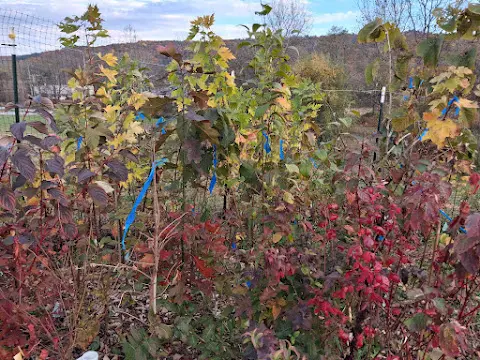
After two years of growth, trees had grown noticeably taller, especially on the left side. We wondered about this.
The miniforest had been divided into four sections, each given a different soil amendment on planting day in 2024.
Section 1, next to Caitlynn, had no amendments.
Section 2, toward the middle, had compost from the Town of Ithaca.
Section 3, on the left in the back, had compost + biochar.
Section 4, on the left in front, had a living inoculum from Web of Life that was cultured on wood chips and applied around the roots as they were planted.
All the sections have the same mix of species. You can see that trees on the left (section 4) look taller than those in the other sections. We decided to measure the heights of four tree species, chosen because they had been planted from pots and had been grown under similar conditions at White Oak nursery. (Most of the other trees were planted as bare root saplings that had been stored in bundles in soil over the summer.)
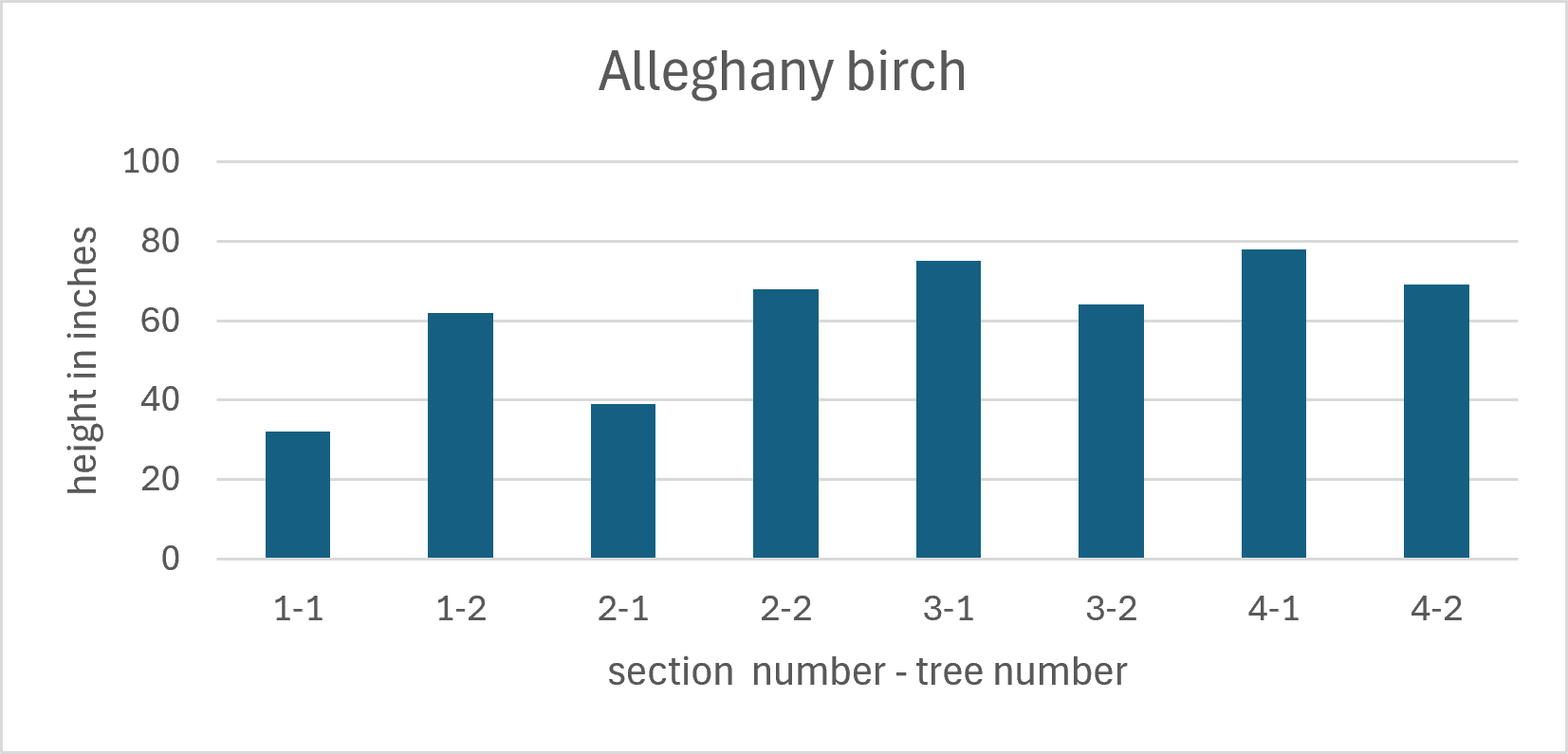
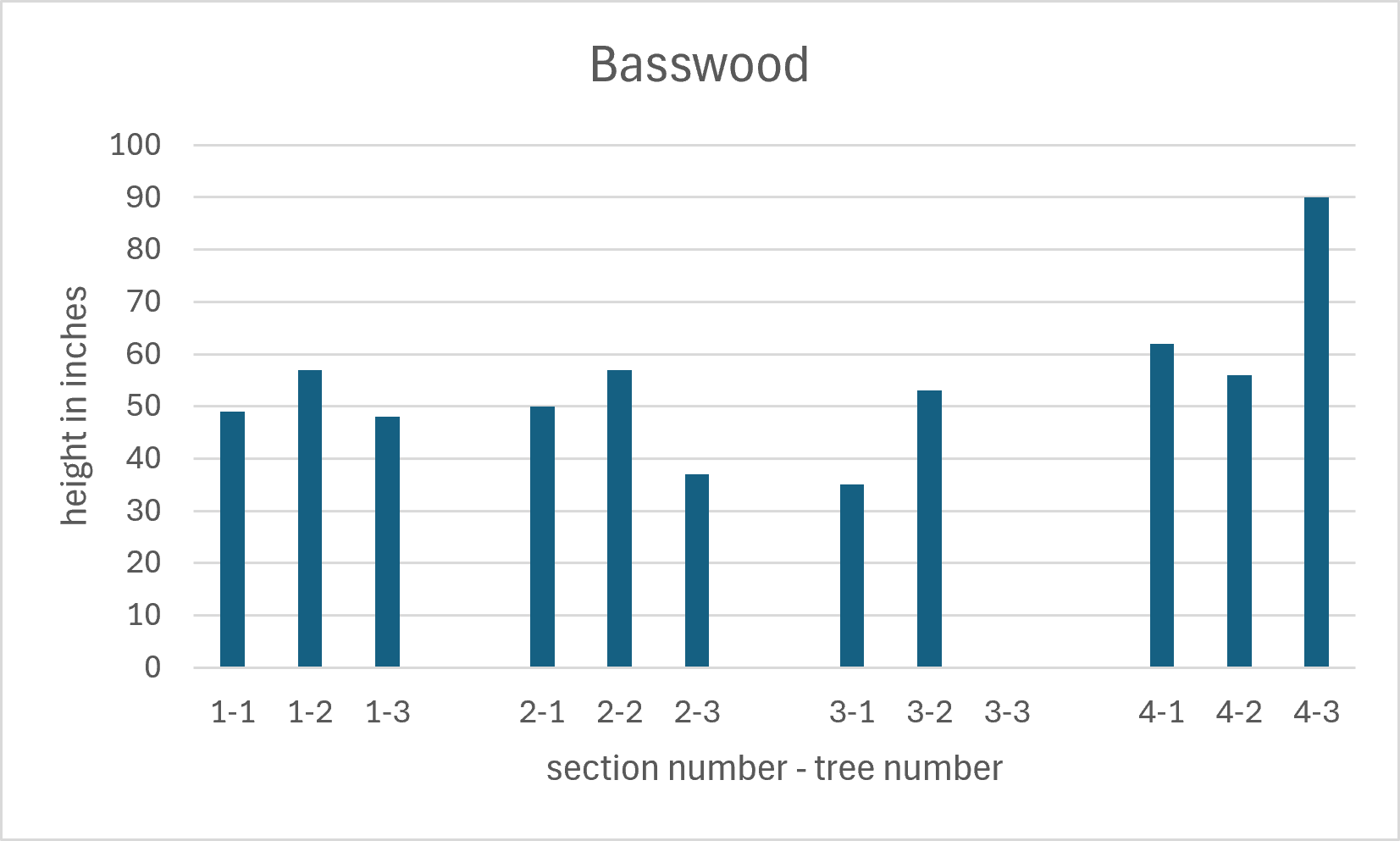
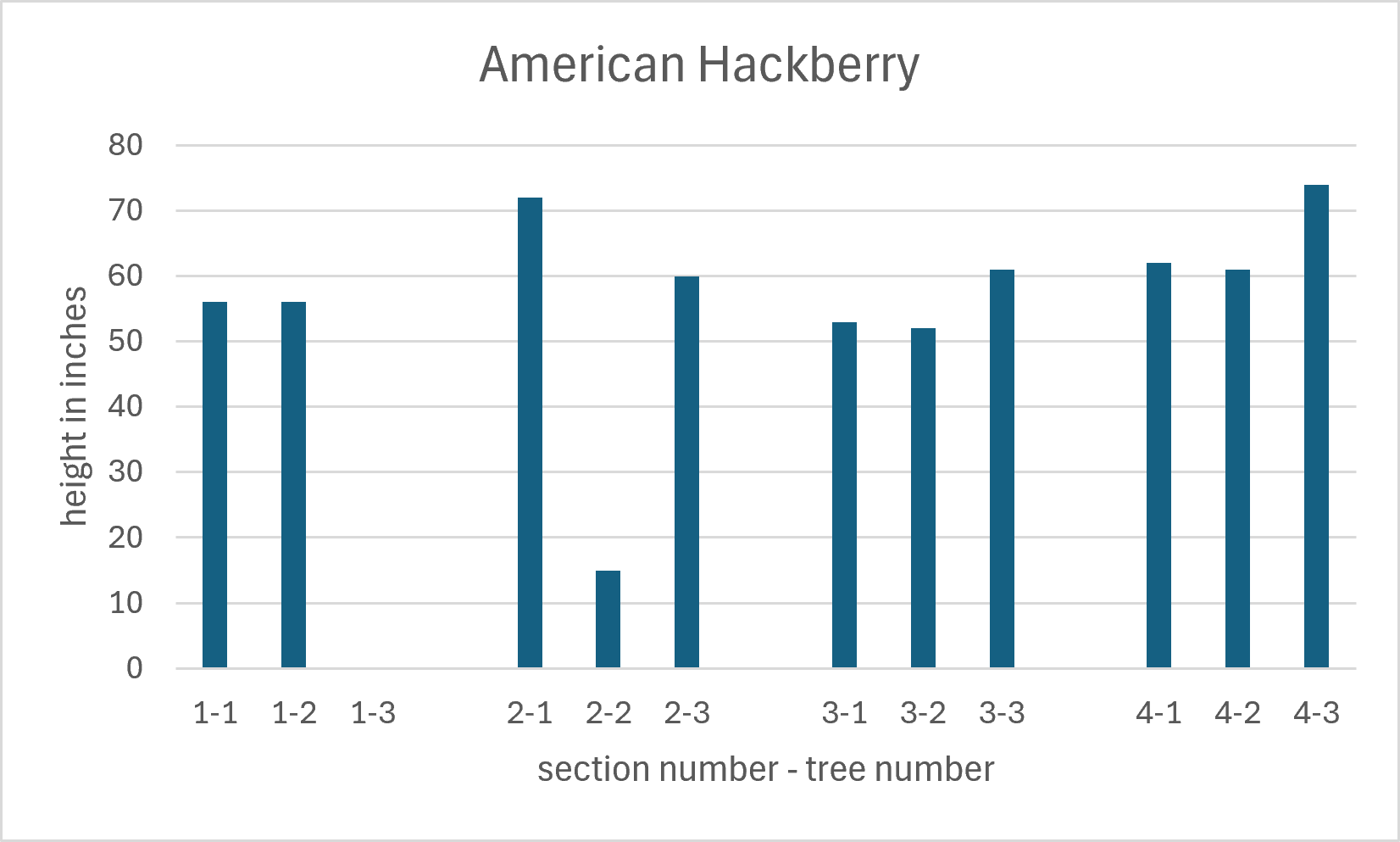
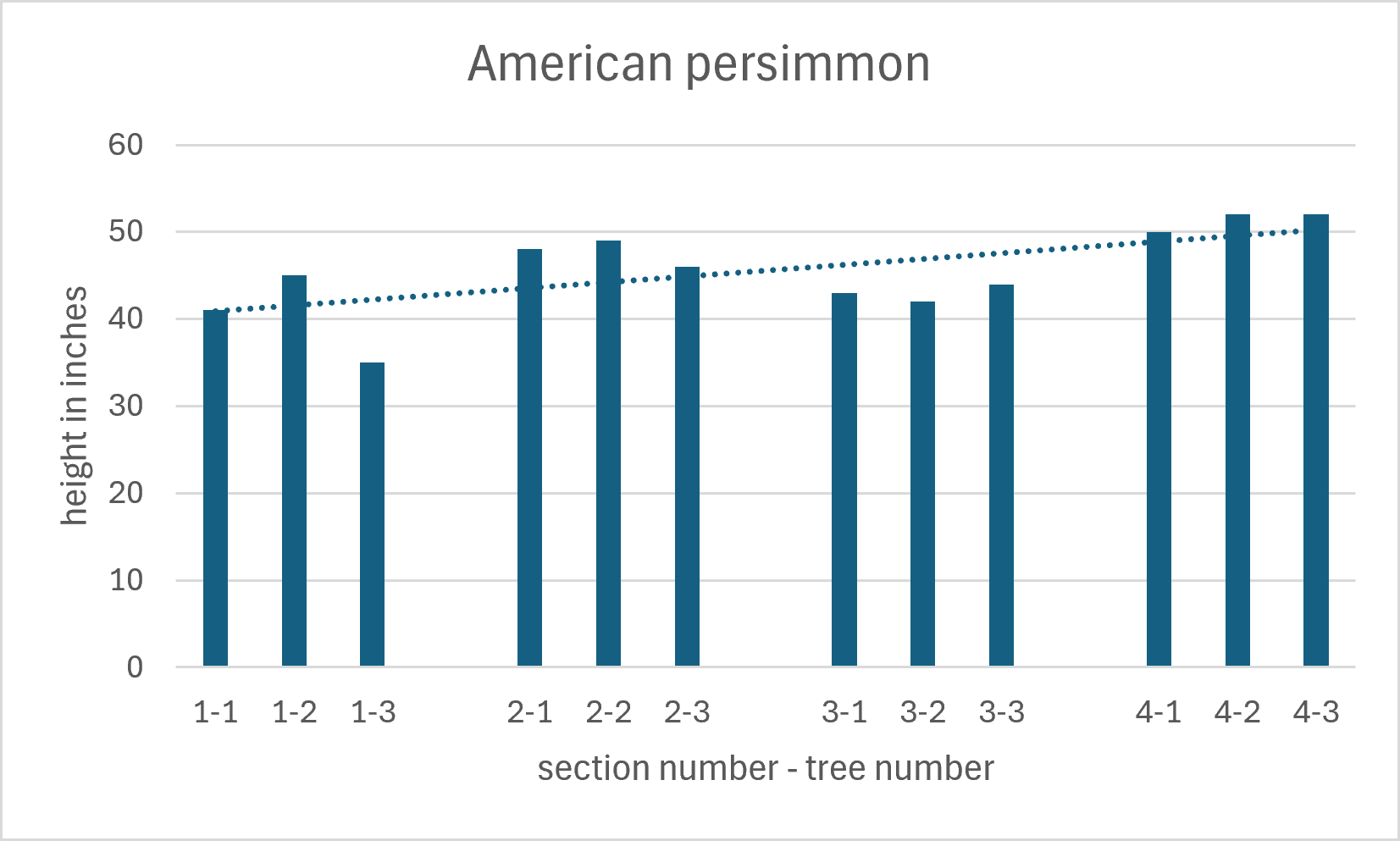
The 4 charts below show the heights of each tree sorted by the sections. The bars look about the same, but the numbers show that all four species growing in section 4 were, on average, slightly taller than those growing in the other sections. However, some individuals of both birch and hackberry in sections 2 and 3 achieved the same height as some in section 4. Both persimmon and basswood grew taller in section 2 (compost) than in section 3, (compost + biochar).
Data from this small sample of trees suggests that something about the conditions in section 4 seemed to favor vertical growth. It may have been that lush growth of these plants produced a shadier understory and competition for light propelled them upward. But we didn’t measure light levels in the understory, it just seemed to be more lush than in the other sections. What other factors might be considered? We’ll keep track of these questions when the forest wakes up again in spring 2027.
As the season grew colder and darker, the miniforest was tucked in for the winter.
